Computing as cybernegative reinforcement
Little provocation for the upcoming online event tittled "Critical computing." Próximamente en español

What can be studied is always a relationship or an infinite regress of relationships. Never a “thing.” -Gregory Bateson cited on The Ethnography of Infrastructure by Susan Leigh Star
As we all work within this field, we know that computing is not just about the collecting, measuring and recombining of data to spit out clean facts about the world, but a very fuzzy infrastructure that links various practices all around the globe that include both human and non-human work. The medium in which this raw power for computing is stored is of material descent: silicon wafers, copper wires, gold plated contacts, metal-oxide semiconductors, lithium and now carbon batteries, etc. This is not without the precarious work from the Global South or immigrants within so called “developed countries” when it is their soils they exploit. These raw materials undergo several changes from there to the hardware that enables computing as we know it: ASML, TSMC, Intel, Micron, and so forth. Then there are the companies which provide the services be it business to business or direct to customer for computing on and offline: IBM, ORACLE, Google, nVidia, Microsoft… all that raw material converter into raw computing power builds a vast infrastructure that entangles the Internet with oceanic cables providers, edge data centres and local ISPs. And the listing of enactants can go on forever with ever more excruciating detail, up to the workers in India, Colombia or the Philippines that categorize all sorts of unstructured data for training and benchmarking enormous power-hungry models of unimaginable compute power. The ecosystem of data is now all encompassing: we are employed much like the annotators every time we fill out a ReCaptcha for accessing to a service -training OCRs, autonomous driving or whatever Google can think of next-, we are all within the measurement and soft control sphere, the dream of first order cybernetics. And for that, my approach is that the “cyberspace” is not an ethereal or immaterial sort of Hilbert space from which algorithms can catch vectors and embed or entangle them for some piece of information, cyberspace is our milieu.
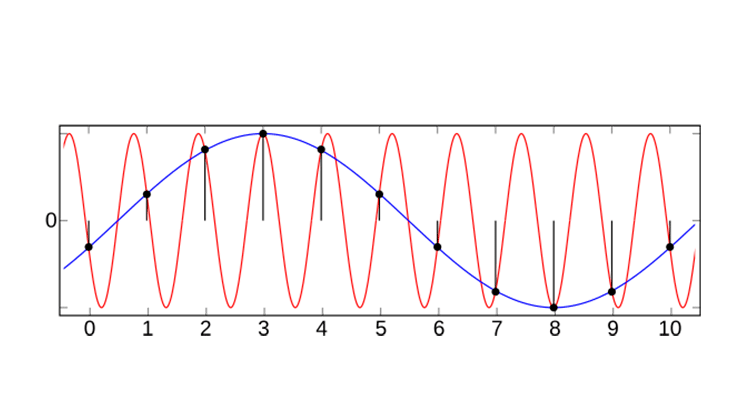
Everytime we enter a shopping centre, a supermarket -everytime we get triaged, everytime we enter the workplace and everytime we open a chat- we enter a ledger system that makes us dividuals as Deleuze said in his postscriptum, we become an aggregate from which trends, inferences, predictions, categorizations occur, not just as a mere byproduct of what raw data suggests and mathematic modelling that spits objective facts, but at the bottom of it is a factiche as Latour suggests, both constructed and derived from data -that is, goes beyond social and technical determinism-. This is important in two ways: firstly, a keen look at the tradition within STS called “standards and classification studies” initiated by Susan Leigh Star and Geoffrey Boker, and its closely related cousin called “infrastructure studies” beginning also with Susan Star. And also, secondly, a problem within computation itself, that has arisen from a very early age of computer science: the problem with sampling, and more specifically the problem of how to correlate continuous phenomena into discrete measurements, how does it work, what is the best sampling rate and how can we estimate appropriately as if we had continuous data or the ability to compute it without estimations.
The first branch of approaches I want to make explicit here is the standards and classification/infrastructure studies approach, because it simply depicts two ways of entering an issue. The first one, is pretty straightforward: computing today requires enormous amounts of data to train increasingly sophisticated models that compute thousands of millions of parameters and make sense of what could be noisy data 25 years ago is now the best raw material to throw non-supervised inferential models to see what sticks before the tuning and annotators come in. The study of standards and classifications takes into account what the measurement enacts in the world, not just as information about the world but information within the world that enables semiotic-material configurations to emerge. Every measurement and classification distils into what are called lines of facts, that are ensembled within several technological innovations such as statistics in the 17th century or categorization models today. The “merely” describe the differences and differentials that are seen within a dataset and the criteria of the categories in which such dataset is fragmented upon, but these classifications cybernegatively reinforce what an agent within such category is able to, race as “scientific fact” turns into apartheid as Bowker and Star show in a chapter of Sorting Things Out: Classification and its Consequences. These facts, of course, do not travel or exist alone, they need an infrastructure to enable it, so the infrastructure studies come in: whenever a “naturalized” way the world is portrayed it stays as mere nature, be it social or not, a state of things; is just when fairly engrained infrastructures break that we get a glimpse on a chain of human and non-human work that enables “social nature”. Then, standards and classifications studies the facts that enable a line of fact to become a line of segmentarity, a way of delegate, establishing and marking distinct actors in what they should or can do as a way of entering phenomena of measurement, computing and establishing facts from a top-down perspective, whereas the infrastructure studies work in a bottom-up manner, in which the slightest deviation from what a line of segmentarity shatters makes ripples through an infrastructure. We have seen it recently, how an unmaintained repository on Git nearly broke servers and the whole of the Internet as SSH was compromised in the process: one man stopped maintaining and a hack broke downstream from the repo to the infrastructure as enormous as the WWW in 2024. The ensemble of these top-down and bottom-up approaches gives us an organismic way of looking at our problem at hand.
The second branch I want to propose is well within signal engineering, the problem of digitizing a continuous fluctuation into data points. At the AT&T Bell Labs, Claude Shannon and Harry Nyquist proposed a theorem for sampling rate, to avoid aliasing, or false data by way of not approximating properly what is a continuous wave to an interpolation of discrete points. This problem arose within Shannon’s own PhD thesis, John von Neumann’s recalling of the EDVAC computer and all floating point computing -continuous mathematics is really hard to solve by number theory, binary is not the exception-. You all can do this exercise with me: let’s open any Python instance without any sophisticated libraries and write down ‘if (0.1 + 0.2 == 0.3)’ and run it. It returns a FALSE boolean when it is such a trivial problem even as a floating point. You’ll see that when you run just the arithmetic ‘0.1 + 0.2’ is a fairly good approximation of ‘0.3’ and we can conclude that is the same as holding pi to ‘3.1416’, good enough, and we may be right as we see that approximations do not ruin our lives when we use a fairly more complicated thing as a GPS. But the sampling problem is well within the issues of computing, be it analog signals, behaviour or our unstructured data. Those are the perspectives in which I want you all to join me.